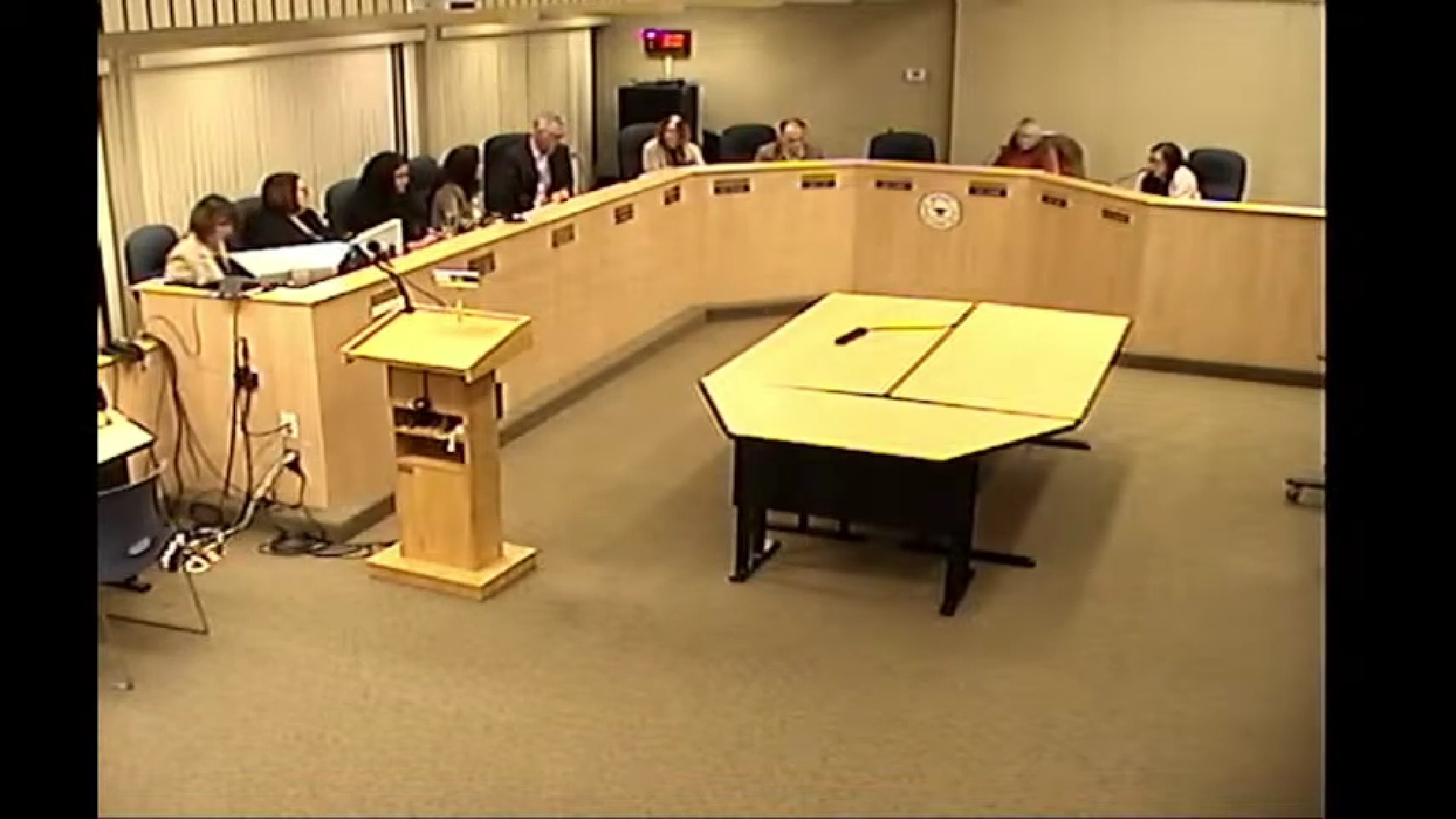
FREMONT, Calif. — The Fremont Unified School District’s Board of Education has approved a Hindi language pilot program for two schools in the district, but one boardmember disagrees with the decision, citing budget and equity concerns.
On Wednesday, Jan. 17, the board voted, 4-1, to approve a three-year Hindi language pilot program at Irvington High School and Horner Middle School, starting in the 2024-2025 school year based on student interest. Boardmember Dianne Jones was opposed, saying the board was sidestepping important processes and engagement.
“When we make decisions that create disparities, like one of our high schools being able to offer five language programs while others only offer two, and some three, that absolutely is an equity issue,” Jones said. “Even if the eventual goal is to offer this at more schools, the decision about where to place the pilot is absolutely an equity issue.”
Assistant Superintendent Leticia Salinas said Irvington and Horner were selected because those were the sites where the most interest had been expressed in a Hindi language program, though Superintendent CJ Cammack clarified that none of the other schools in the district had been surveyed.
Salinas said limiting the pilot to the two schools would allow the teacher who is hired to focus on building out a sustainable program that could be expanded districtwide. Cammack said the reason to avoid doing a survey was to manage expectations since all the schools might express interest, but a pilot could only be implemented at one or two.
Jones pointed out this decision would mean Irvington would have five language programs, while John F. Kennedy High School would still only have two.
The district currently offers Mandarin, Spanish, French and American Sign Language. Once the board approves a course for one school, it can be taught at any school as long as they have a teacher with the right certifications to teach it and enough student interest.
Cammack said schools with larger student populations can more readily offer a wider array of courses because they garner interest more easily, while smaller high schools might not be able to get enough students to run a course section.
Because Kennedy is a smaller high school, it may never reach the enrollment thresholds needed to be able to teach certain courses it has the potential to offer, Jones said. She added that the district has a bad track record of expanding advanced courses to additional schools, especially the more disadvantaged ones, which results in disparities between schools.
According to state data from 2023, 54.7% of students were prepared for success after graduating from Kennedy, compared to 84.7% at Irvington.
“The only way to guarantee that we start to close these types of gaps is to start a pilot somewhere like Kennedy,” Jones said. “That guarantees that Kennedy has another language program.”
Cammack responded that Kennedy wouldn’t be a good fit for the pilot program because it has a block schedule, in which students attend four longer classes rather than eight shorter classes each day of the school week.
“If we implement the pilot there, Kennedy students will finish Hindi 1 in the first semester and we then need to have Hindi 2 available in the same instructional year or we need to work on a semester-long class,” Cammack said. “That is not a roadblock that cannot be crossed ever, but it was something staff considered in terms of the timeline and the pilot and the potential implementation.”
Jones highlighted other concerns with the decision, including the fact that the course was being approved after the deadline for submitting course requests and that the district will have to make tough financial decisions in the near future, with an expectation of making $3 million in cuts during the first year of the pilot and $12.3 million in the second year.
“This is not just about supporting the addition of one standalone class,” Jones said. “This is a program that requires multiple years of investment.”
However, Boardmember Vivek Prasad said there was a demand for Hindi in the community and offering Hindi would help grow enrollment, which would in turn help grow revenue.
“Not having something at one place and a failure of the system should not define how we make decisions for a significant demand like this,” Prasad said.
Boardmember Larry Sweeney said he believed the program would benefit the district and its students as much as the Mandarin and Spanish immersion programs and saw no reason not to approve it.
The rest of the board agreed.
Staff has reached out to both De Anza College and the University of California at Berkeley, which both offer Hindi language courses, for support in implementing the program.
“We will be pioneers in this work,” Salinas said.
Sonia Waraich can be reached at 510-952-7455.